Managed SIEM for Mid-Market Startups: Real-Time Threat Detection Without Enterprise Bloat
Enterprise SIEM platforms cost hundreds of thousands of dollars and generate crushing alert fatigue. Here is how startups deploy lightweight open-source agents with AI-driven alert correlation for 24/7 threat detection.
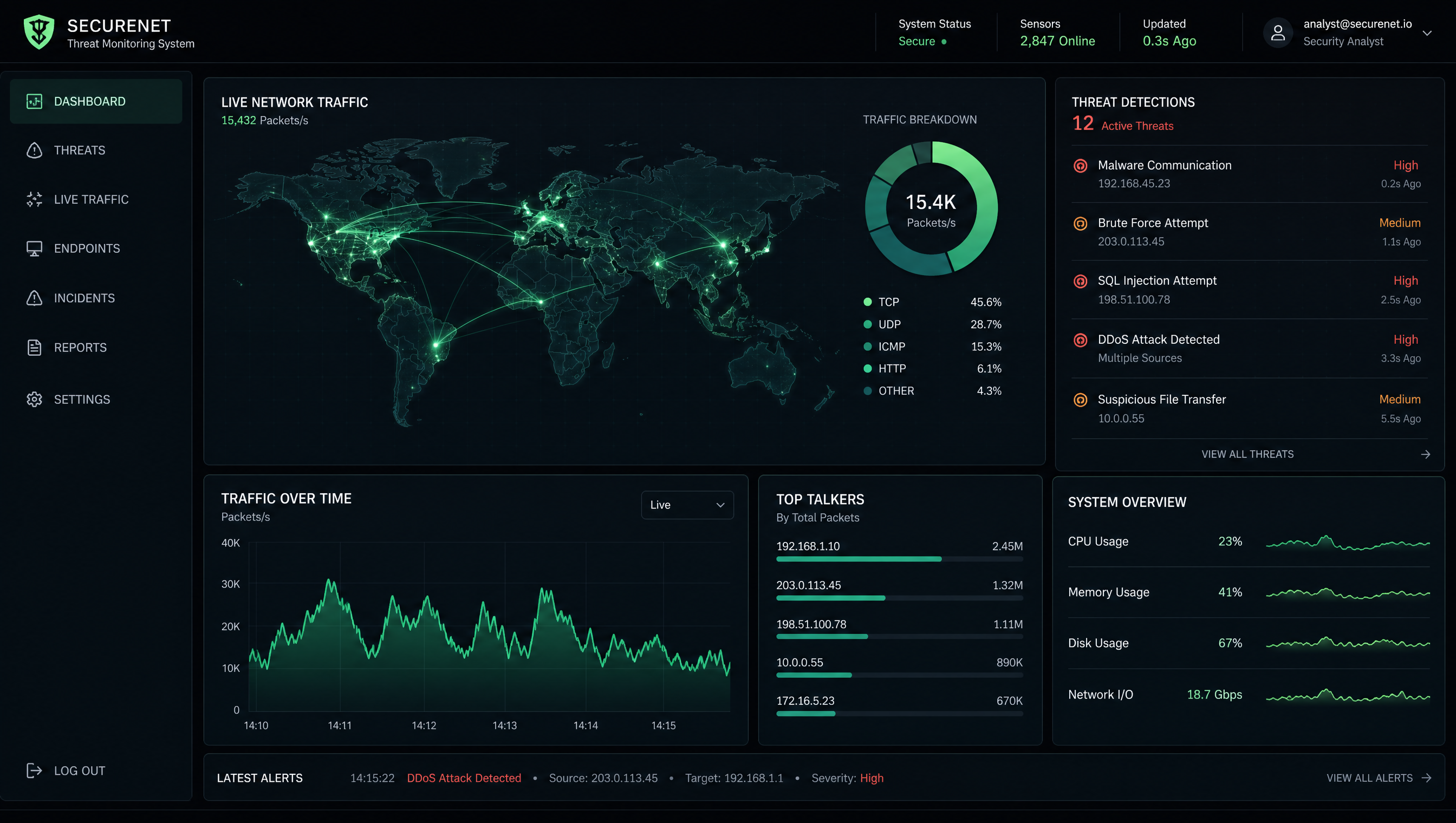
Table of ContentsExpand
Implementing a managed SIEM for startups involves pairing lightweight open-source log aggregation agents (such as Wazuh) on cloud nodes with AI-assisted alert correlation and human-in-the-loop triage. This hybrid architecture eliminates expensive enterprise software licensing fees while delivering real-time anomaly detection, automated root-cause isolation, and continuous compliance audit logging across all cloud endpoints.
- 01.Passive log storage without automated correlation leaves organizations blind until after a catastrophic breach.
- 02.Lightweight open-source agents (Wazuh) deliver real-time file integrity and intrusion detection with <50MB RAM footprint.
- 03.Custom correlation rules targeting brute-force SSH, privilege escalation, and .env mutation eliminate noise.
- 04.AI-assisted triaging enriches candidate alerts with surrounding telemetry and plain-English remediation playbooks.
- 05.Automated edge containment stops active attacks at the Cloudflare/WAF perimeter in milliseconds.
| Capability Vector | Enterprise Bloated SIEM | HarLyn Managed Sentinel |
|---|---|---|
| Real-Time Detection | High false-positive noise ($100k+ annual licensing) | AI-correlated & prioritized 24/7 SOC response |
| Cost & Operational Overhead | Six-figure enterprise licenses and complex upkeep | Lean managed tier with zero software waste |
| Active Containment | Slow manual playbooks | Automated edge WAF/firewall IP containment |
| Compliance Audit Readiness | Painful manual report assembly | 1-Click ODPC/GDPR audit certificates |
The Log Aggregation Paradox
As growing startups scale from a single web server to multi-region cloud infrastructures and microservices, security visibility usually breaks down.
Most startups face a dangerous dilemma:
- The Log Cemetery: Storing raw server logs in S3 buckets without automated correlation, only reviewing them *after* a catastrophic breach has occurred.
- Enterprise SIEM Overkill: Committing to six-figure annual contracts for enterprise platforms (Splunk, Datadog Security) that generate thousands of unprioritized false-positive alerts.
The 4 Components of a Lean SIEM
1. Unified Lightweight Endpoint Daemons
Deploy low-overhead open-source agents (such as Wazuh agent) across production VMs, Kubernetes nodes, and cloud instances to collect SSH auth logs, Nginx access patterns, and file integrity events in real time.
2. High-Fidelity Custom Correlation Rules
Tailor rules to specific risk patterns:
- Brute Force SSH / API Floods (>15 failed requests in 60s).
- Unauthorized Privilege Escalation (sudo invoked by service accounts).
- Sensitive File Mutation (.env or cryptographic key folders modified).
<!-- Sample Custom Wazuh Threat Rule -->
<group name="web,attack,authentication">
  <rule id="100201" level="12">
    <if_matched_sid>31101</if_matched_sid>
    <same_source_ip />
    <different_url />
    <frequency>15</frequency>
    <timeframe>60</timeframe>
    <description>HarLyn Sentinel: Potential API Directory Fuzzing or Webhook Exploit Attempt</description>
  </rule>
</group>
3. AI-Assisted Alert Triaging & Context Synthesis
Candidate incidents are fed through an AI correlation agent that gathers surrounding server metrics, deduplicates repetitive noise, and synthesizes an executive summary with actionable remediation steps.
4. Automated Edge Containment & Active Response
When malicious thresholds are breached, execute automated active response scripts to ban offending IPs at Cloudflare WAF within milliseconds.
Frequently Asked Questions
Bring This Resilience to Your Enterprise Stack
Harrison Ndeke and Nazline Mwita conduct a comprehensive 48-hour diagnostic audit of your n8n workflows, Next.js web application speed, and cybersecurity perimeter.